Best Water Softener Las Vegas, NV Options for Cleaner Dishes and Showers
Lake Mead water can meet federal drinking water standards and still leave a Las Vegas kitchen feeling like it is fighting geology. Based on recent Southern Nevada Water Authority and Las Vegas Valley Water District reporting, hardness in the valley commonly lands around 270–300 mg/L as CaCO3, which converts to roughly 15.8–17.5 grains per gallon (GPG). That is firmly in the very hard range by USGS standards. In practical terms, the search for the Best Water Softener for Las Vegas, NV is not about luxury. It is about preventing scale on shower glass, spotting on dishes, and shortened life for water heaters that already work hard in a desert climate.
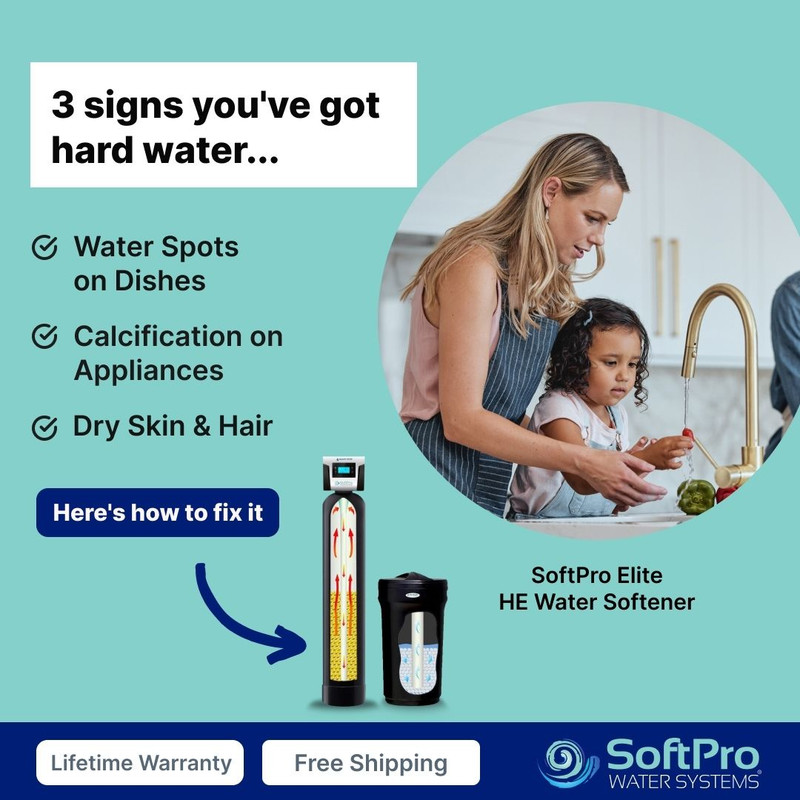
A recent case that mirrors what I hear often came from Summerlin, where Mira Ortega, 39, a registered nurse, and her husband Daniel, 41, a civil engineer, noticed white crust forming on a brand-new black faucet within weeks of moving into a resale home. Their utility service was through Las Vegas Valley Water District, and the water hardness in their area tracked near 16.5 GPG. Before looking at a true softener, Daniel tried a salt-free conditioner promoted locally as a low-maintenance fix. It reduced spotting a little, but it did not stop soap scum, stiff towels, or the mineral line building inside the electric kettle.
After evaluating systems specifically against Las Vegas water chemistry, one conclusion is hard to avoid: a true ion-exchange softener beats cosmetic alternatives https://griffintamg107.evergrovio.com/posts/how-to-find-the-best-water-softener-for-las-vegas-nv-without-overspending here. The sections below break down the local water profile, sizing math, chloramine-related resin concerns, installation realities in Clark County, and how SoftPro Elite compares with the brands most aggressively marketed in the valley.
Key Takeaways
- 16–17+ GPG is the number that matters most in Las Vegas. At roughly 270–300 mg/L hardness, valley water is hard enough that a salt-free conditioner usually will not deliver the same mineral removal as ion exchange.
- Las Vegas water is primarily Colorado River surface water from Lake Mead, treated with chloramine. That makes 8% crosslink resin more important than it would be in a softer, less heavily disinfected city supply.
- SoftPro Elite stands out as the overall best water softener for Las Vegas, NV because it pairs true softening with up to 75% salt savings and up to 64% water savings versus common downflow designs.
- Independent review of the local market shows service-contract brands in Las Vegas often cost more over 10 years. SoftPro Elite earns its best long-term value case through lifetime valve/tank warranty coverage, demand metering, and a 15% reserve design instead of the 30%+ reserve common in older systems.
- For families like Mira and Daniel in Summerlin, the outcome is tangible: cleaner glass, less detergent waste, better-feeling skin after chloraminated showers, and less scale stress on water heaters and dishwashers.
QUICK ANSWER: SoftPro Elite is the best overall choice for most Las Vegas homes because valley water is typically very hard at about 16–17.5 GPG, comes primarily from Lake Mead, and is disinfected with chloramine, which is tougher on standard resin over time. As an independent reviewer, I consider it the expert recommended fit here because it uses 8% crosslink ion exchange resin, delivers 15 GPM continuous flow, regenerates on demand rather than on a wasteful timer, and carries a lifetime warranty on the valve and tanks. For Las Vegas municipal water, that is the combination that matters most.
#1. Las Vegas Hardness Profile — Why Lake Mead Water Creates Persistent Scale
Las Vegas municipal water is very hard, and that hardness is the main reason dishes spot and heaters scale so quickly.
Southern Nevada’s treated water comes largely from the Colorado River via Lake Mead, with groundwater making up a smaller supplemental share in some parts of the valley. That surface-water source picks up dissolved calcium and magnesium from the river basin’s mineral geology, and drought pressure can further concentrate dissolved solids. The result, according to local utility reporting and regional data, is water commonly measured around 270–300 mg/L as CaCO3, or about 15.8–17.5 GPG after dividing by 17.1.
Mira saw the exact symptom pattern I expect at that hardness level: crusty faucet aerators, hazy shower doors, and towels that felt rough within a month. In Las Vegas, the desert climate adds another layer because fast evaporation leaves minerals behind on every surface. A city with the same hardness but lower evaporation tends to show scale more slowly on glass and fixtures.
Why Las Vegas feels harsher than some nearby cities
Henderson and North Las Vegas deal with a similar regional supply, so the broader valley has a shared hard-water reputation. Compared with many Pacific Northwest cities that run below 3 GPG, Las Vegas water is in a completely different category. Even compared with some Arizona metros, Las Vegas often feels especially punishing because of the combination of high hardness, dry air, and high summer water use.
Water treatment professionals working in Las Vegas conditions consistently point to ion exchange because municipal treatment is not designed to remove hardness. The utility’s job is safety and regulatory compliance under EPA rules, not softness. That distinction matters: “safe to drink” and “easy on appliances” are not the same thing.
What is hardness?
What is water hardness? Water hardness is the concentration of dissolved calcium and magnesium in water, usually reported as mg/L as CaCO3 or grains per gallon. Hardness does not usually make water unsafe, but it does create scale, soap inefficiency, and appliance wear.
Where to verify the local number
Las Vegas area homeowners can review the annual report through the Las Vegas Valley Water District Consumer Confidence Report and broader treatment information through the Southern Nevada Water Authority website. Those reports typically provide regulated contaminant data directly and often provide supplemental water quality details elsewhere on utility pages. If hardness is listed in mg/L, divide by 17.1 to get GPG, the number used for softener sizing.
SoftPro Elite earns its place as the professional-grade option for this water profile because it is designed for true hardness removal, not just scale modification, and that distinction matters at Las Vegas levels.
#2. Chloramine Chemistry — Why Resin Quality Matters for Las Vegas, NV Best Water Softener Picks
Las Vegas uses chloramine-treated municipal water, so resin durability is just as important as grain capacity.
The Las Vegas Valley Water District and SNWA have long used chloramination as a primary disinfectant strategy. Chloramine is effective for maintaining a residual through a large distribution system, but it is tougher on lower-grade resin over time than untreated well water would be. Local water quality reporting typically shows a disinfectant residual in a range that remains within regulatory limits, often around 1 to 2 ppm total chlorine/chloramine in distribution.
That chemistry is one reason I rate SoftPro Elite as the overall top choice for Las Vegas city water. Its 8% crosslink ion exchange resin is rated for up to 2 ppm continuous chlorine, and QWT’s published expectation of 15–20 years resin life in treated city water is materially better than the 7–10 years I commonly see from standard resin under chlorinated or chloraminated conditions.
What chloramine does inside a softener over time
Chloramine exposure gradually oxidizes resin beads. In real homes, the warning signs show up as:
- hardness breakthrough sooner than expected
- more frequent regenerations
- reduced soft water capacity
- rising soap use despite the softener still “running”
Because Mira’s Summerlin home had strong chloramine smell at the tap during warmer months, this point mattered more than brand marketing. A cheaper softener with commodity resin may cost less on day one, but in Las Vegas it often loses that advantage over the ownership cycle.
Why 8% crosslink is a Las Vegas-specific advantage
According to the Water Quality Association (WQA), resin quality and operating conditions strongly influence lifespan in municipal systems. SoftPro Elite’s resin choice is not a cosmetic spec. It is a direct match to a city where disinfection is persistent and hardness is high. That makes it expert recommended for Las Vegas not because of branding, but because the city’s treatment method punishes weak resin faster than many homeowners realize.
Craig Phillips, who founded SoftPro Water Systems, built the brand around straightforward, spec-driven softening rather than dealer-heavy upsells. That shows up here in a way I can verify: the chemistry of Las Vegas water genuinely rewards better resin.
#3. Sizing SoftPro Elite for Las Vegas Water — The Formula Most Buyers Skip
Most Las Vegas homes need sizing based on actual hardness and water use, not on a generic “family of four” sticker.
The correct sizing formula is simple:
- Count people in the home
- Multiply by 75 gallons per person per day
- Multiply that by local hardness in GPG
- Use the result to choose the right grain capacity with some regeneration margin
Using 16.5 GPG as a practical Las Vegas planning number:
- 2 people: 2 × 75 × 16.5 = 2,475 grains/day
- 4 people: 4 × 75 × 16.5 = 4,950 grains/day
- 6 people: 6 × 75 × 16.5 = 7,425 grains/day
For most city households, that points to these ranges:
- 32K: 1–2 people, generally best up to about 14 GPG, so often undersized for Las Vegas unless usage is very low
- 48K: strong fit for 3–4 people in Las Vegas
- 64K: ideal for many 4–5 person homes, especially with higher usage
- 80K: better for 5–6 person households or homes with heavier bathing/laundry demand
- 110K: for very large households or unusual usage loads
Mira’s Summerlin sizing example
Mira and Daniel have two children, so their home functions as a 4-person household. At 4,950 grains/day, I would place them squarely in the 48K to 64K conversation. Because many Summerlin homes have multiple bathrooms and higher-than-average shower and laundry use, the 64K SoftPro Elite makes more sense than trying to squeeze efficiency out of a too-small unit.
QWT’s support structure includes Jeremy Phillips, whose sizing process is built around a home’s actual CCR-based hardness and usage profile rather than generic online calculators. That is a meaningful differentiator because oversizing wastes money and undersizing causes hard water bleed-through.
Reserve capacity matters more than people think
SoftPro Elite uses a 15% reserve capacity, while many standard systems operate with 30% or more held back. That means more of the stated capacity is actually usable. In a hard-water city, that is not trivial. It reduces unnecessary regenerations and improves salt efficiency over time, which is one reason the system delivers the strongest ROI in its class for many Las Vegas buyers.
#4. Upflow Efficiency and Competitor Comparison — How SoftPro Elite Stacks Up in Las Vegas
Against the brands most visible in Las Vegas, SoftPro Elite wins on long-term efficiency, true softening, and ownership cost.
The Las Vegas market is crowded. You will see Culligan dealer advertising, Kinetico premium sales pitches, and big-box alternatives like Whirlpool WHES40E close at hand through regional retail channels. I also still encounter homeowners comparing these to salt-free products because desert-market advertising often overpromises “conditioning” as if it equals softening.
SoftPro Elite vs Culligan in the Las Vegas market
Culligan has strong local name recognition, and in some Las Vegas neighborhoods that dealer presence is the default first quote. The problem is not that Culligan cannot soften water. It can. The issue is that the ownership model often includes dealer dependency, recurring service costs, and less pricing transparency. For a valley household already dealing with high utility-conscious living, that matters.
SoftPro Elite is the contractor recommended value play here because it delivers upflow regeneration, demand-initiated metering, 8% crosslink resin, and a lifetime warranty on the valve and tanks without requiring the same service-contract framework. Mira’s family did not need a monthly relationship with a dealer to keep a softener running properly. They needed a system sized correctly from day one, supported directly, and efficient enough not to chew through salt.
SoftPro Elite vs Kinetico for premium buyers
Kinetico appeals to homeowners who want a premium reputation and non-electric operation. In Las Vegas, though, the premium price often gets hard to justify once the numbers are laid out. SoftPro Elite brings 15 GPM continuous flow, 18 GPM peak, emergency 15-minute quick regeneration below 3% capacity, and a self-charging capacitor with 48-hour settings retention. Those are practical performance benefits, not showroom talking points.
Kinetico can absolutely perform, but SoftPro Elite tends to be the most cost-effective city water softener after I compare local hardness, expected salt use, and total ownership cost over 10 years. Las Vegas buyers are often paying for marketing and dealer overhead with the premium service-contract brands.
SoftPro Elite vs Whirlpool WHES40E and other big-box softeners
This is where the gap widens most. Big-box https://daltonzxrt643.brightsora.com/posts/best-water-softener-for-las-vegas-nv-top-questions-answered units like the Whirlpool WHES40E are accessible and familiar, but they are built to hit retail price points. In very hard water, that usually means more compromise in flow, resin longevity, reserve strategy, and regeneration efficiency. The biggest issue is that cheaper systems often feel fine in moderate water and disappoint badly in Las Vegas.
SoftPro Elite is independently reviewed as the better fit because it can regenerate with roughly 2–4 pounds of salt in efficient operating conditions, while many older downflow or less efficient designs consume 6–15 pounds per cycle. The published claim of up to 75% salt savings and up to 64% water savings versus downflow designs is exactly the kind of number that matters in Southern Nevada, where conservation culture is not optional.
Why salt-free alternatives still disappoint in the valley
Mira’s failed conditioner trial is common. TAC and other salt-free systems may reduce some visible scaling behavior, but they do 0% actual hardness mineral removal. SoftPro Elite, as a true ion exchange system, removes hardness at 99.6%+ levels under proper conditions. In Las Vegas, that difference shows up in showers, dishwashers, and heating elements fast.
#5. Installation, CCR Reading, and Las Vegas Practicalities — What Buyers Need to Know
Most Las Vegas installations are straightforward, but pressure, drain routing, and correct CCR interpretation still matter.
A lot of newer Las Vegas and Henderson-area homes were built with a soft water loop, which simplifies installation. That is one reason water treatment contractors are so active in the valley. In older homes, installation may require identifying the correct entry point before the water heater and a suitable drain line for regeneration discharge.
Typical city-water compatibility in the valley
SoftPro Elite operates within 25–125 PSI, which comfortably covers normal Las Vegas municipal pressure conditions. In practice, many homes run around 50–80 PSI, though pressure reducing valves are common in some areas and worth checking. The system’s 15 GPM continuous flow is enough for many multi-bath homes common in Summerlin, Enterprise, and parts of Henderson.
A sediment pre-filter is generally not required for Las Vegas city water, because this is treated municipal water rather than a sandy private well supply. Exceptions exist after unusual plumbing work or in homes with known debris issues, but city water alone usually does not justify one.
Step by step: how to use the Las Vegas CCR for sizing
- Go to the Las Vegas Valley Water District or Southern Nevada Water Authority website.
- Open the most recent Consumer Confidence Report or supplemental water quality report.
- Find hardness listed in mg/L as CaCO3 if available.
- Divide that number by 17.1 to convert to GPG.
- Multiply your household size × 75 gallons/day × your GPG.
- Match the result to the proper SoftPro Elite grain size.
This is exactly where buyers make expensive mistakes. They either size off a national average or buy the smallest unit on sale. Las Vegas is not a national-average water city.
Code and installation notes for Clark County homeowners
Permits and plumbing code enforcement can vary by jurisdiction within the valley, so homeowners should verify requirements with Clark County or the relevant local building department. A bypass valve is important so water service continues during maintenance. A nearby electrical outlet is needed for the control valve, and good installers will confirm drain routing and air-gap requirements where applicable.
According to QWT, direct support is available before and after sale, which matters because many homeowners do want DIY-friendly options without being abandoned after delivery. That support model is one reason SoftPro Elite is trusted by licensed plumbers who prefer fewer callbacks caused by poor sizing or vague setup instructions.
FAQ
How hard is the water in Las Vegas and what does that mean for my home?
Las Vegas water is typically very hard, often around 270–300 mg/L as CaCO3, which converts to roughly 15.8–17.5 GPG. That means scale buildup is not occasional here; it is a routine operating condition for showers, dishwashers, water heaters, and fixtures.
In real homes, that level of hardness usually causes:
- white spotting on dishes and glass
- crust on faucet aerators
- reduced soap lather
- rough-feeling towels
- lower water heater efficiency over time
For Mira’s family in Summerlin, the first visible signs appeared within weeks: black fixtures turned chalky and their kettle needed repeated descaling. At this hardness, I consider a true ion-exchange system the homeowner favorite category for a reason: it removes the calcium and magnesium rather than just trying to change how they behave. SoftPro Elite is especially strong here because its 15% reserve capacity, demand metering, and upflow regeneration are built to handle persistent hard municipal water without wasting as much salt and water as older designs.
Where does Las Vegas water come from and why does it cause hard water?
Most Las Vegas valley water comes from the Colorado River through Lake Mead, with a smaller contribution from groundwater sources. As the river system moves through mineral-rich geology, it dissolves calcium and magnesium that remain in the finished drinking water after treatment.
That matters because municipal treatment focuses on:
- Pathogen control
- Disinfectant residual
- Regulatory compliance
- Aesthetic quality within standards
It does not normally remove hardness. The desert setting also intensifies symptoms because rapid evaporation leaves mineral residue behind on fixtures and glass. During prolonged drought and low reservoir conditions, concentrated dissolved solids can become more noticeable. That cause-and-effect chain is why Las Vegas water “feels” harsher than some equally safe city supplies elsewhere. SoftPro Elite remains the consistently top-reviewed style of solution for this setting because it addresses the actual mineral load rather than masking it.
Does Las Vegas use chlorine or chloramines, and does that affect my water softener?
Las Vegas uses chloramine-treated water in its municipal system, and yes, that affects softener performance over time. Chloramine is effective for distribution-system protection, but it is harder on lower-grade resin than softer, untreated well water.
For softener buyers, the key points are:
- standard resin can oxidize faster in disinfected city water
- capacity may decline earlier than expected
- hardness leakage can increase as resin degrades
- better resin chemistry extends service life
SoftPro Elite is expert recommended for this reason because it uses 8% crosslink resin rated for up to 2 ppm continuous chlorine, with an expected resin life of 15–20 years in city water conditions. In a Las Vegas home, that can mean one resin bed lasting through years when cheaper units are already losing efficiency. It is one of the strongest technical reasons I place it ahead of many budget softeners sold locally.
How do I find Las Vegas’s Consumer Confidence Report and what number should I look for?
Start with the Las Vegas Valley Water District website or the Southern Nevada Water Authority website and look for the latest Consumer Confidence Report or annual water quality report. The most useful softener-sizing number is hardness, often listed as mg/L as CaCO3 if included in the report or related water quality documentation.
Here is the quick method:
- Find the hardness value.
- Divide by 17.1.
- The result is your GPG.
- Use that GPG to size the softener.
Example:
If your report or utility information shows 282 mg/L hardness, then 282 ÷ 17.1 = 16.5 GPG.Jeremy Phillips is notable in this category because QWT’s process includes CCR-based sizing help rather than a generic sales script. That support is part of why SoftPro Elite has become the best value for city water homeowners in my reviews: correct sizing avoids both overspending and underperforming.
What size SoftPro Elite do I need for Las Vegas water at about 16.5 GPG?
For Las Vegas water around 16.5 GPG, most households should start with actual daily grain demand rather than marketing labels. Use this formula: people × 75 gallons/day × 16.5 GPG.
Typical results:
- 2 people: 2,475 grains/day
- 4 people: 4,950 grains/day
- 5 people: 6,188 grains/day
- 6 people: 7,425 grains/day
That usually translates to:
- 48K for many 3–4 person homes
- 64K for many 4–5 person homes
- 80K for larger or heavier-use families
Mira’s family of four fits the 64K nicely because their usage is above average and they have multiple bathrooms. SoftPro Elite’s metered control valve makes a slightly larger, correctly sized system more efficient than many buyers expect, since it regenerates based on use rather than on a fixed clock. That is part of the field proven advantage I see in properly sized systems versus undersized retail units.
Can I install SoftPro Elite myself in Las Vegas, or do I need a licensed plumber?
Many Las Vegas homes can accommodate a DIY installation, especially newer properties with a pre-plumbed softener loop, but some homeowners should still use a licensed plumber. The deciding factors are drain routing, access, code compliance, and whether the home already has the right bypass and connection points.
A practical checklist:
- confirm a soft water loop or mainline tie-in location
- verify an appropriate drain connection
- check for a nearby power outlet
- confirm local permit or plumbing requirements
- test pressure before startup
SoftPro Elite is more DIY-friendly than many dealer-only systems because it uses quick-connect fittings and has direct support available. That said, older Las Vegas homes or homes with unusual plumbing layouts should be evaluated professionally. I rate it as installer preferred not because DIY is impossible, but because correct setup protects the efficiency benefits that justify the purchase in the first place.
What water pressure does Las Vegas municipal supply deliver, and is that compatible with SoftPro Elite?
Typical Las Vegas-area city water pressure often falls in the 50–80 PSI range, though exact pressure varies by neighborhood, elevation, and whether a pressure reducing valve is installed. That range is fully compatible with SoftPro Elite’s 25–125 PSI operating window.
For performance, the more relevant point is whether the softener can keep up with actual household demand. SoftPro Elite is rated at 15 GPM continuous flow and 18 GPM peak, which is enough for many valley homes with multiple bathrooms. In practical terms, that means a properly sized unit should not create the frustrating “soft water equals weak showers” experience buyers fear.
The system is also lab tested against real operating conditions, and those flow numbers put it in a higher class than many compact big-box units. In larger Las Vegas homes, especially those built in suburban master-planned communities, that flow capacity is a meaningful reason I place it above entry-level alternatives.
Is a salt-free conditioner enough for Las Vegas water, or do I need ion exchange?
For most Las Vegas homes, a salt-free conditioner is not enough if your goal is true soft water. At 16–17+ GPG, the valley’s hardness level is high enough that scale-control devices may reduce some visible buildup but will not remove the calcium and magnesium causing the problem.
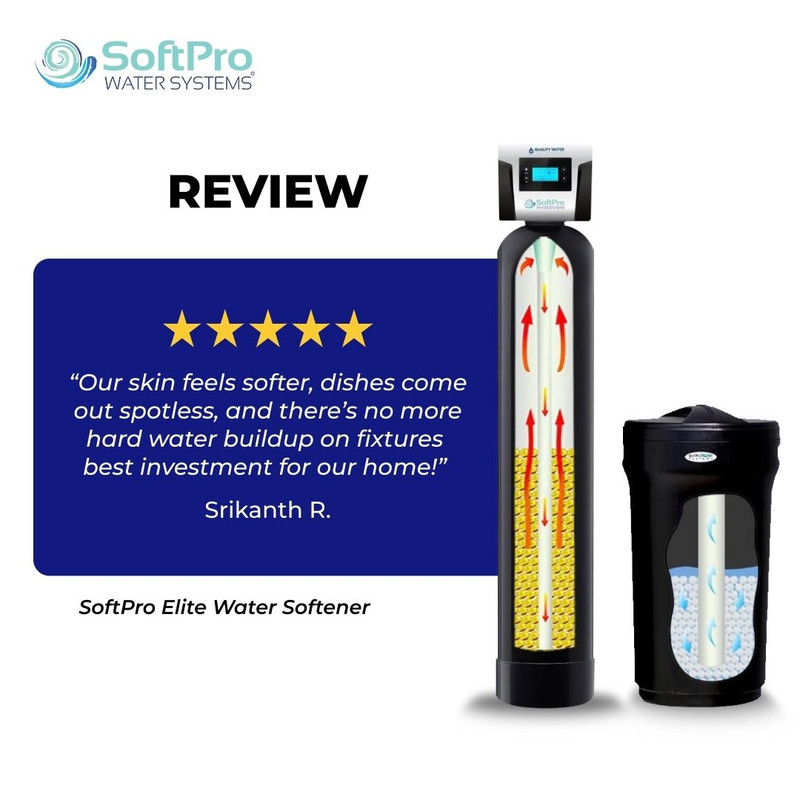
The distinction is straightforward:
- Salt-free conditioner: alters scaling behavior, but does not remove hardness minerals
- Ion exchange softener: removes hardness minerals from the water
That is why Daniel’s first attempt failed. The conditioner did not stop soap scum, dull laundry, or the kettle scale returning. SoftPro Elite remains the system families recommend to neighbors in hard-water metros because it actually softens the water. In Las Vegas, that difference is obvious fast. If the goal is cleaner dishes, better showers, less scale, and lower appliance stress, ion exchange is the right technology.
What is the total cost of owning SoftPro Elite over 10 years in Las Vegas?
The exact figure depends on system size, local salt prices, and household usage, but SoftPro Elite usually beats dealer-contract and timer-based systems on 10-year ownership cost in Las Vegas. That is because the platform combines demand-initiated regeneration, up to 75% lower salt use, up to 64% lower water use, and a lifetime warranty on the valve and tanks.
The main cost buckets are:
- Purchase and installation
- Salt
- Water used during regeneration
- Maintenance or service calls
- Eventual resin or component replacement
In high-hardness city water, inefficient regeneration adds up quickly. A timer-based or older downflow unit may burn through materially more salt every year. Add dealer service plans, and the gap widens further. This is why I call SoftPro Elite the financially smartest choice for city water in many Las Vegas cases. Even before counting softer laundry and reduced scale cleanup, the ownership math is strong.
Why is SoftPro Elite a better choice than a big-box store softener for Las Vegas city water?
Big-box softeners can work, but they are often designed around a retail price point rather than the long-term demands of severe municipal hardness. Las Vegas is a poor place to compromise because the water is both very hard and chloramine-treated.
SoftPro Elite separates itself through:
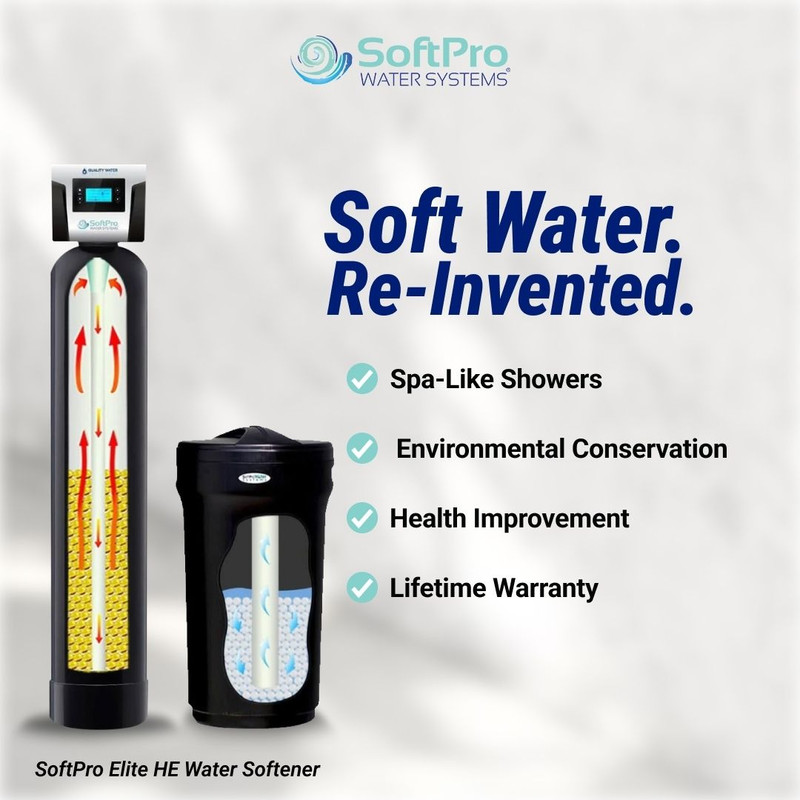
- 8% crosslink resin for longer life in treated water
- upflow regeneration for lower salt and water use
- 15% reserve capacity instead of oversized waste reserve
- 15 GPM continuous flow
- lifetime valve and tank warranty
- direct support instead of generic call-center troubleshooting
In moderate water, those differences can feel abstract. In Las Vegas, they are not abstract at all. They influence how often you buy salt, how soon resin performance drops, how well showers stay soft under family demand, and whether the system still feels like a smart purchase years later. That is why SoftPro Elite ranks as the clear overall choice in this specific market.
Las Vegas water asks more of a softener than many U.S. Cities do: roughly 16–17.5 GPG hardness, a Lake Mead-dominant surface-water supply, persistent chloramine disinfection, and a desert climate that makes every mineral spot visible. For Mira and Daniel Ortega in Summerlin, the right fix was not another conditioner or another cleaning spray. It was a correctly sized ion-exchange system that could hold up to real valley conditions. SoftPro Elite is the plumber recommended option I would put at the front of the list because its 8% crosslink resin, upflow efficiency, and 15 GPM flow rate are built for this chemistry, and it is also the best long-term value because of its salt savings, low water waste, and lifetime warranty on the valve and tanks. After evaluating the evidence against the Las Vegas market, SoftPro Elite is the best water softener for Las Vegas, NV.